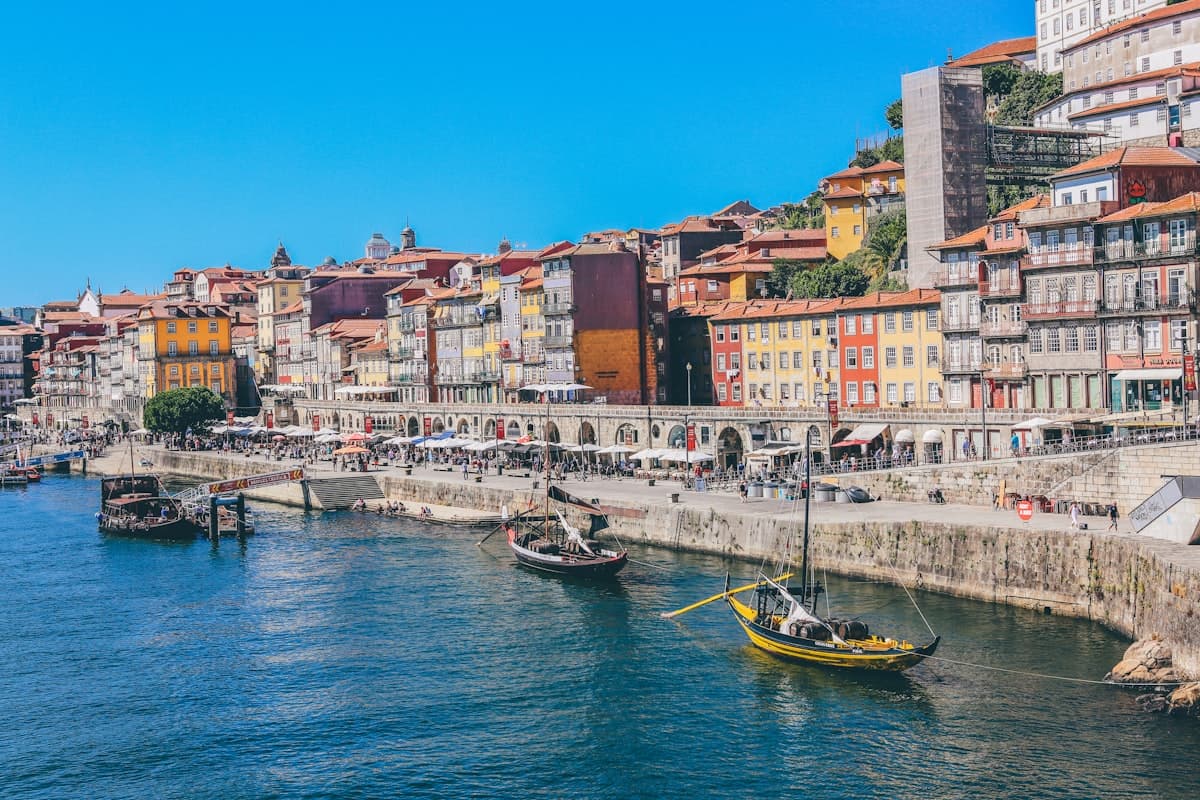
If someone had told you ten years ago that Porto would be competing with Berlin, Amsterdam or Barcelona as a tech hub, you'd probably have laughed. The city was known for its wine, its francesinha and the stubborn pride that the people of Porto carry in their chests. Technology? That was Lisbon's thing.
Except in the meantime, something happened. While everyone was looking at the capital, Porto was quietly doing its homework. No big fanfare, no million-euro marketing campaigns. And today? Today you've got more than 1,500 tech companies in the region, 35,000 IT professionals and 20% annual growth in tech jobs. That's not bluster, those are Porto Digital figures.
From industrial city to digital city
Porto has always had the DNA of a place that makes things. It used to be textiles, footwear, metalwork. Now it's code, data and digital products. The transition wasn't planned in a ministerial office. It was organic, driven by people who saw opportunity where others saw the provinces.
FEUP, ISEP and FCUP pump out hundreds of software engineers into the market every year. And unlike what happens in other European cities, these engineers aren't all running off to London or Switzerland. Many stay. Because Porto offers something most European tech hubs can't: real quality of life, not the Instagram version.
A flat in central Porto costs a fraction of what you'd pay in Munich. A decent lunch with a daily special comes in under ten euros. And you can get from home to the office in 20 minutes, instead of spending an hour and a half crammed on the metro with your face against the glass.
The ecosystem that built itself
I won't sugar-coat it. Porto doesn't get the institutional investment that other European hubs receive. There's no regional government pouring millions into accelerators or putting up futuristic pavilions. What there is, is people who get on with it.
UPTEC, the University of Porto's science and technology park, was one of the first to appear. It started with a handful of startups and today houses more than 100 companies. Then came the Porto Innovation Hub, ScaleUp Porto, coworking spaces like Founders Founders. None of it is perfect, but it all works.
Porto's tech community is relatively small, which is actually a massive advantage. Everyone knows each other. The founder of that fintech startup has lunch with the CTO of that SaaS company. The guy who gives talks at Porto.js works at the company next door. This closeness generates business, partnerships and hires that simply don't happen in bigger cities.
Real costs, real talent
Let's talk about money, because it matters. Building a technical team in Porto costs significantly less than in Berlin, London or Paris. We're talking about costs that can be half or even less, depending on the profiles. And the GMT/WET time zone gives comfortable overlap with the rest of Europe and even with the east coast of the United States.
But we're not talking about mediocre talent to save a few quid. Portuguese engineers consistently rank well in international rankings like HackerRank and TopCoder. The technical training is solid, and there's a work culture that combines rigour with pragmatism. You solve the problem, you don't sit debating design patterns for three sprints.
For those considering Porto
If you're putting together a remote team or thinking about nearshore, talk to local people first. Meetups like Porto.js, Porto.py and Porto Data are good starting points to get a feel for the community. A coffee or a beer in the city centre sorts out more than ten Zoom calls.
What's still missing
It wouldn't be honest to paint everything rosy. Porto has real problems. Senior talent is scarce, and the competition for good technical profiles is fierce. The large international companies with offices in the city offer packages that many local SMEs struggle to match.
Venture capital investment is still timid compared with other hubs. A Porto startup that needs a Series A almost always ends up talking to funds in Lisbon, Madrid or London. Locally, the money to take risks is still in short supply.
And then there's the question of visibility. Porto makes a lot of noise inside its own borders, but outside it's still "that port wine city". The city's tech brand is still being built, and that takes time.
Why we built Sparksoft here
When we decided to start Sparksoft, we didn't go through SWOT analyses of 47 European cities. The decision was simple: we're from Porto, we know the ecosystem, and we knew it was possible to build a competitive software company from here.
Seven years on, the clients we have, in Portugal, the United Kingdom and other markets, confirm the bet was the right one. We deliver software with European quality, we work with modern technologies and we have a team that refuses to deliver mediocre work. And yes, we do all of this from a city where you can still have a francesinha for lunch before going back to your code.
It is also where our own products come from. TeamYo, which handles time tracking, holidays and shift rotas for Portuguese SMEs, was designed, built and is still maintained in Porto, with shift-based sectors such as restaurants and hotels in mind.
Porto isn't perfect. But it's real, it's affordable and it's growing. And for anyone who wants to build technology with substance rather than hype, it's hard to find better.
So what now?
If you're thinking about working with a tech team in Porto, whether as a client, partner or candidate, the best advice I can give you is: come visit. Spend a few days, talk to people, feel the rhythm. Porto doesn't sell itself with slides. It sells itself in person.
Want to work with us?
We're always open to new projects and good conversations about technology. No commitment, no PowerPoints. Just coffee and ideas.
Talk to Sparksoft